
-

杭州师范大学外国语学院2026级外“新”人见面会
-
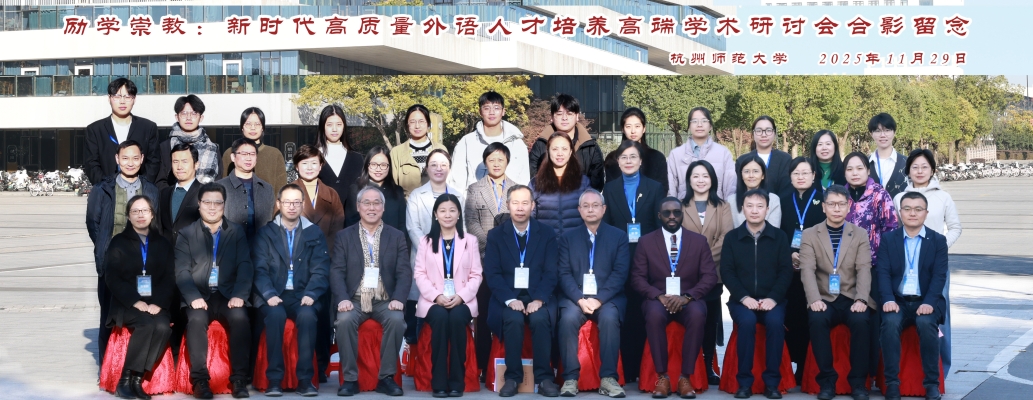
“励学崇教”新时代高质量外语人才培养高端学术研讨会
-
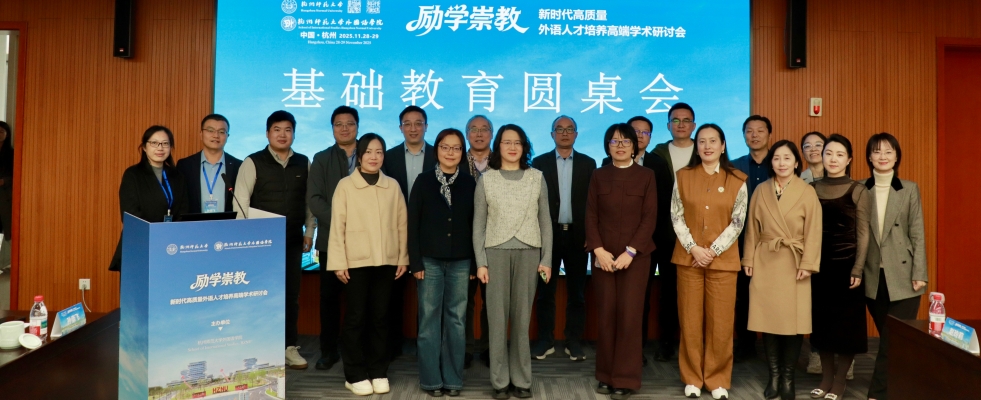
基础教育论坛圆桌论坛
- 如何建构与开展中国翻译史研究
- Corpus-Driven and AI-Assisted Approaches in
- 语际间性与翻译
- 刻意隐喻理论视域下的企业话语研究
- 狄更斯小说的视觉叙事与贺加斯传统
- 中国式现代化背景下的中华民俗文化译介研究
- 杭州与沈熏:一个殖民地知识分子的中国体验
- 日本文学传统精神之再思考
- 中韩关系的现状与未来展望
- Emotional Asymmetry: How Weibo Celebrities N
- 区域国别研究典型范例——中美大豆百年战争
- 比较文学文献学:生活世界是永无讹误的校勘依据
- International Education in a Globalized Worl
- 从龙虾智能体到AI4S:科研范式的智能进化与实践
- Mobility In American Painting
- 如何撰写学术论文和资政报告
- Charlotte Brontë’s Jane Eyre and Its Reader
- 工具、技术与人文
- 学术论文的写作与投稿问题
- 会议通知 || 全球文明倡议下的文学伦理学批评:
时间:2025年10月29日(周三)9:45
地点:勤园8号楼403
主讲内容:
All readers of Swahili poetry know the verse that punctuates Shaaban Robert’s famous poem entitled “Kiswahili” published in 1960: “Titi la mama ni tamu, jingine halishi hamu” (The mother’s breast is soft, no other can bring satisfaction). By comparing the mother tongue to a nourishing udder, this image recurs like a refrain throughout the forty-three stanzas of the poem, bringing an imaginary which I would like to question from an ecolinguistic perspective. Putting language in relation to the needs of the body is a good way to defend a living space for the Kiswahili which is, at this time, not yet truly recognized as a major language on a global scale, despite the efforts of the colonial administration to make it the unifying language of East Africa. Through this famous poem, we can analyze how Kiswahili exists and develops in contact with moving bodies, in relation to environments and in permanent interaction with other languages.
主讲人简介:
Xavier Garnier is professor of African literatures at Université Sorbonne Nouvelle and Senior Member of Institut Universitaire de France (IUF). His research focuses on the evolution of narrative forms in the African novel in French, English and Kiswahili from the colonial era to the present day. He recently published a book on African ecopoetics (Karthala, 2022).
 官方微信
官方微信
 官方微博
官方微博