
-

杭州师范大学外国语学院2026级外“新”人见面会
-
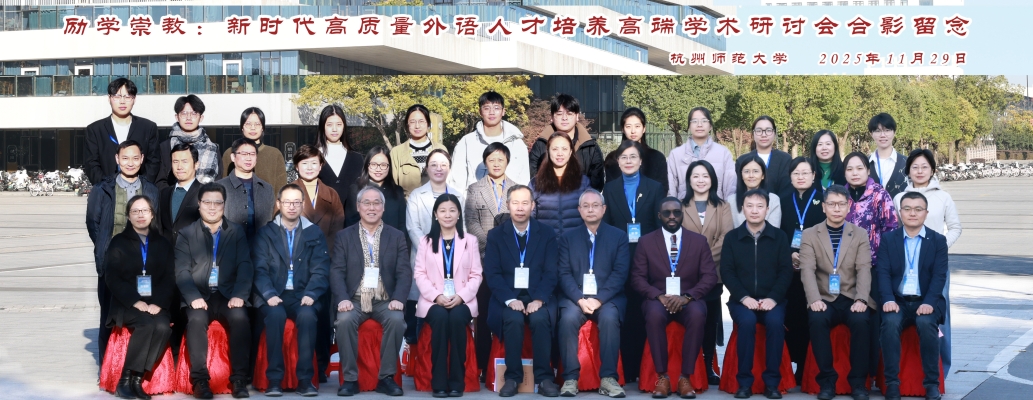
“励学崇教”新时代高质量外语人才培养高端学术研讨会
-

基础教育论坛圆桌论坛
- 狄更斯小说的视觉叙事与贺加斯传统
- Corpus-Driven and AI-Assisted Approaches in
- 语际间性与翻译
- 刻意隐喻理论视域下的企业话语研究
- 中国式现代化背景下的中华民俗文化译介研究
- 日本文学传统精神之再思考
- 杭州与沈熏:一个殖民地知识分子的中国体验
- 中韩关系的现状与未来展望
- Emotional Asymmetry: How Weibo Celebrities N
- 区域国别研究典型范例——中美大豆百年战争
- 比较文学文献学:生活世界是永无讹误的校勘依据
- International Education in a Globalized Worl
- Mobility In American Painting
- 从龙虾智能体到AI4S:科研范式的智能进化与实践
- 如何撰写学术论文和资政报告
- Charlotte Brontë’s Jane Eyre and Its Reader
- 工具、技术与人文
- 学术论文的写作与投稿问题
- 会议通知 || 全球文明倡议下的文学伦理学批评:
- 我们为什么要研究非洲哲学?
时间:2023年11月1日13:30
地点:仓前校区恕园19-205
主讲内容:
This presentation delves into the political discourses in Spain and Argentina, which are contextualized within the broader geopolitical landscapes of Europe and Latin America. It primarily focuses on the evolving discourse of the far-right, characterized by unconventionality, anti-establishment stance, and critique of politics (understood as the action of corrupt individual politicians). The central aim of this discursive move is to establish a new hegemony capable of challenging the cultural and ideological consensus built by the left and the modern social movements (feminism, environmentalism) since the 60s, related to equality projects of society, the provision of public services, and the protection of fundamental rights.
This presentation aims to provide valuable insights into how the far-right constructs its discourses to achieve hegemonic positions and power in Western countries, shedding light on the continuously evolving political landscape in Spain and Latin America.
主讲人简介:
Luisa Martín Rojo is a professor at Autonomous University of Madrid. Her sociolinguistic research primarily revolves around multilingualism in society, with a particular emphasis on language management in education, which contributes to social inequality, as evidenced in her book "Constructing Inequality in Multilingual Classrooms" (Martín Rojo, 2010). Her exploration of the social dimension of multilingualism has recently shifted toward the Latinx diaspora (Márquez Reiter & Martín Rojo, 2016) and the impact of neoliberalism on our understanding of languages and their societal value, as discussed in "Language and Neoliberal Governmentality" (Martín Rojo & Del Percio, 2019). Currently, she leads an action-research project that brings together multiple research teams aimed at transforming situations of inequality influenced by sociolinguistic factors.
 官方微信
官方微信
 官方微博
官方微博